


IMO Adopts MASS Code: The Autonomous Ship Moves from Drawing Board to Regulated Reality
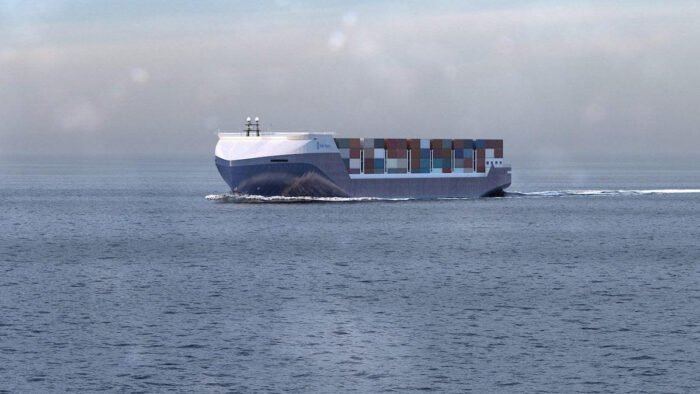
The maritime industry has spent the better part of a decade debating whether autonomous ships represent genuine commercial progress or elaborately funded engineering theatre. That debate has not been entirely resolved, but one of its central preconditions has now been addressed.
By Paul Morgan (gCaptain) – The somewhat controversial concept of autonomous ships is getting ever closer as the International Maritime Organization has adopted the first global regulatory framework specifically designed for Maritime Autonomous Surface Ships, known as the MASS Code, following the conclusion of the 111th session of the Maritime Safety Committee in London on 22 May 2026.
The adoption is not a regulatory green light for fleets of unmanned vessels crossing oceans under the control of artificial intelligence. It is something more measured, and arguably more consequential, than that. It is the moment at which the world’s maritime regulator formally acknowledged that autonomous and remotely operated ships are a legitimate operational category requiring dedicated international governance, not a category that can be accommodated indefinitely through experimental approvals and individual flag-state arrangements.
The Code enters into effect as a non-mandatory instrument on 1 July 2026, beginning what the IMO describes as an Experience Building Phase. The formal framework for that phase will be developed at MSC 112 in December 2026. A mandatory version of the Code is targeted for adoption by 1 July 2030, with entry into force through SOLAS amendments planned for 1 January 2032.
For an industry that has historically measured regulatory change in decades rather than years, this is a compressed timetable, and one that deserves to be taken seriously.
It is worth being precise about what has actually been adopted, and for whom. In its current form the MASS Code applies to cargo ships. The question of its application to passenger vessels has been deferred, with the IMO indicating it will examine that extension as experience is gained through the voluntary phase. This is a pragmatic decision.
The safety and liability considerations surrounding autonomous passenger operations are considerably more complex than those relating to autonomous cargo vessels, and it would have been unreasonable to expect the Code to address both categories simultaneously at this stage.
The MASS Code covers four degrees of autonomy, a framework the IMO has been developing through its regulatory scoping exercise over several years. At Degree One, seafarers remain aboard with automated decision support systems assisting operations. At Degree Two, the ship is operated from a remote location but seafarers remain available onboard. Degree Three sees the vessel remotely controlled without any crew aboard. Degree Four represents fully autonomous operation, where the vessel’s own systems determine actions without human direction.
What has changed is the direction. The adoption of the MASS Code does not transform global shipping overnight. Conventional crewed vessels will continue to dominate commercial operations for the foreseeable future. Seafarers are not about to be displaced at scale.
What has changed is that the autonomous commercial ship now has a legal identity within the international regulatory system. It is no longer a technology project in search of a framework. It is a defined operational category with recognized standards, accountability requirements and a clear pathway toward mandatory regulation.
That is not a minor administrative development. It is the point at which a decade of engineering ambition, commercial investment and regulatory negotiation produced an outcome that will shape how ships are designed, operated, owned and insured for the remainder of this century.
Comments are closed here.