


A Chinese Panamax container ship crosses the Arctic in just six days on the new route between Europe and Asia.
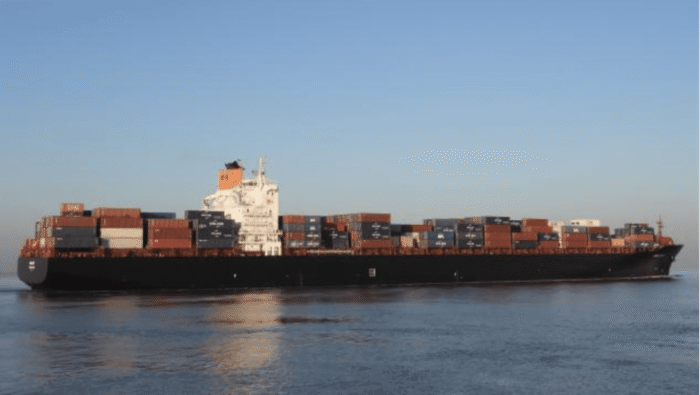
A Chinese-operated Panamax container ship crossed Russia’s Northern Sea Route in just six days, highlighting the emergence of a faster sea route between Europe and Asia. The entire crossing of the polar region, from the waters over Norway to the Bering Sea, took an additional 24 hours.
The Istanbul Bridge departed St. Petersburg on August 18 and is expected to arrive in Qingdao on September 12, completing the route from Europe to Asia via the Arctic in just 25 days. Later this month, the 4890 TEU vessel will inaugurate a new China-Europe Arctic Express, operated by Haijie Shipping Company.
The Arctic Express is scheduled to depart on September 20 and will connect three ports in China (Ningbo-Zhoushan, Qingdao and Shanghai) with major hubs in Europe, including Felixstowe, Rotterdam and Hamburg. The 18-day voyage will be the first of its kind to offer regular line service.
The Istanbul Bridge returns to the Arctic for the second year in a row after becoming the first Panamax container ship, then named Flying Fish 1, last summer. The vessel’s transit along the Northern Sea Route is one of the fastest crossings with the container ship recording speeds of up to 18.4 knots. Along Russia’s main Arctic shipping lane, it averaged around 15 knots.
The rapid pace comes despite persistent sea ice in the eastern reaches of the route, which prevented LNG carriers without ice class over the weekend from continuing on the route. With a low ice class of 1°C, the Istanbul Bridge was able to maintain between 12 and 14 knots even through sea ice in the East Siberian Sea and closely hugged the coast towards the Chukchi Sea avoiding much of the ice-covered waters.

The vessel is one of nearly twelve container ships that have transited the region this summer. On occasion, several container ships traveled in convoy, including the Newnew Polar Bear and the Newnew Panda 1 last month.
With the new Arctic Express, the Haijie shipping company aims to get ahead of other operators in the intense Christmas season to Europe. Chinese goods usually leave in late September and early October to arrive in Europe in November, in time for marketing during the holiday season.
Due to the high volume of traffic, unloading at major European hubs may suffer occasional delays during the peak season. By using the Arctic route and connecting Ningbo to Felixstowe within an expected 18-day timeframe (compared to 40-50 days for the regular Suez Canal route), the Istanbul Bridge is expected to arrive before the main peak, in late autumn.
The company also notes that with faster delivery, suppliers will receive their payments sooner, reducing inventory costs. According to Haijie, the Arctic Express’ initial journey takes weeks to complete, reflecting high demand, likely from suppliers with urgent cargo.
Haijie aims to expand service on the route next year, and high-ice-resistant container ships could extend the sailing season in the future. For now, the summer browsing window remains limited, focusing on the months of August, September, and October.
None of the major container ship operators, including CMA CGM and MSC, have made voyages through the Arctic. The only voyage made by a major Western company came in August 2018, when Maersk sent the 3596 TEU Maersk Venta on a one-off voyage from the Far East to St. Petersburg. Most major shipping companies have publicly decided not to ship through the Arctic for environmental reasons.
Comments are closed here.